
Google’s AI Search | Great For Users, Awful for Content Creators?
by Mike Cynar
In the early days of the internet, Google revolutionized information access by democratizing search. A simple query would yield a curated list of links, prioritizing high-quality, well-optimized content from independent creators and publishers. Those who invested time in research, crafting compelling articles, and adhering to SEO best practices—such as optimized title tags, H1 headers, and schema markup—were handsomely rewarded. Top rankings translated into floods of organic traffic, quality leads, sales, and sustainable businesses. For many, like my own team managing over 100 websites, this model built a seven-figure empire without a single dollar spent on paid marketing.
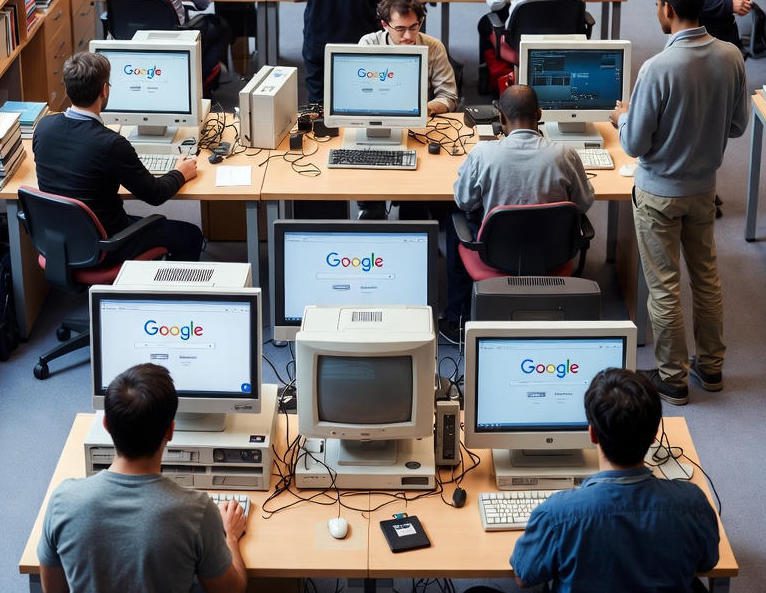
Fast forward to December 2025, and the landscape has dramatically shifted. Google’s AI Overviews (formerly Search Generative Experience) and Microsoft’s Bing Copilot dominate search results for a growing number of queries. These AI-generated summaries pull insights from across the web, synthesizing answers in a concise, user-friendly format that often satisfies searchers without requiring further clicks. While this innovation undeniably enhances user experience—delivering quick, accurate responses—it comes at a steep cost to the very ecosystem that powers it: content creators.
The mechanics are straightforward yet insidious. These AI systems scour the internet, scraping and aggregating content from myriad sources. They then present polished overviews, complete with citations linking back to originals. However, as recent studies reveal, the presence of AI Overviews has led to significant reductions in organic click-through rates (CTR). For instance, organic CTR for informational queries featuring Google AI Overviews fell 61% since mid-2024. Overall, AI Overviews decrease CTRs by an average of 34.5% for top-ranking pages. In some cases, CTRs plummet to just 8% when AI summaries are present, compared to 15% for traditional results. Publishers report traffic losses ranging from 8-15% to as high as 64% in affected industries.

Cloudflare’s CEO, Matthew Prince, highlighted a stark metric: for every 18 pages Google scrapes today, publishers receive just one visitor, down from a 6:1 ratio six months prior and 2:1 a decade ago, largely due to AI-driven scraping. Independent creators have shared harrowing stories: some have shuttered operations, while others face severe revenue collapses, with click-throughs dropping 80–90% when AI Overviews appear. In my own experience, our sites—optimized to Google’s exacting standards—have suffered 50-90% organic traffic declines in the past year. Two years ago, we thrived on free referrals; today, we’re allocating over $1 million annually to paid marketing, with projections for even more in 2026.
The irony is palpable. Content producers once “obeyed” search engine guidelines, pouring hundreds of hours into research and optimization to align with algorithms that promised reciprocity. Now, that reward system is eroding. Why invest in SEO when the fruits of your labor are repurposed without driving meaningful traffic? Many creators are pivoting: posting on favored platforms like Reddit, experimenting with schema markup innovations, or bypassing search engines altogether through direct paid channels. As one expert noted, traditional metrics like rankings are decoupling from actual visibility—you can hold position one yet vanish from AI responses.
The Impact of Bing AI on SEO
While Google often steals the spotlight, Microsoft’s Bing Copilot is similarly reshaping the SEO landscape. Bing’s AI-powered search integrates generative responses, leading to comparable declines in organic traffic. Studies show that AI results in Bing, much like Google, contribute to falling organic clicks as users get answers directly in summaries. Organic impressions may be rising due to broader query matching, but actual clicks are plummeting, with some reports indicating a surge in zero-click searches.

Bing’s approach emphasizes conversational search and long-tail keywords, forcing SEO strategies to adapt. Traditional rankings may not guarantee visibility in AI responses, as Bing prioritizes content that aligns with user intent and provides comprehensive, authoritative answers. Marketers must now optimize for both engines, considering differences like Bing’s stronger focus on multimedia and local search signals. The overall effect? A fragmented SEO ecosystem where reliance on any single engine is risky, pushing creators toward diversified traffic sources.
Generative Experience Optimization (GEO): Strategies in Detail
As AI search evolves, Generative Experience Optimization (GEO) emerges as a critical adaptation strategy. GEO focuses on structuring content to enhance visibility and citations within AI-generated responses, going beyond traditional SEO. Unlike SEO’s emphasis on rankings, GEO aims to influence how AI models interpret and cite your content in summaries.
Key GEO strategies include:
- Focus on Clarity and Authority: Write concise, well-structured content with unique insights, statistics, and quotations to make it AI-friendly. AI models favor authoritative sources, so build E-E-A-T (Experience, Expertise, Authoritativeness, Trustworthiness) through credible backlinks and expert authorship.
- Target Search Intent and Conversational Queries: Optimize for long-tail keywords and natural language questions. Use headings, bullet points, and schema markup to help AI parse intent accurately.
- Incorporate Persuasive Elements: Add unique phrasing, fluent additions, and technical terms to stand out in AI aggregations. Ensure content is comprehensive, covering topics deeply to increase citation likelihood.
- Leverage Structured Data: Enhance with advanced schema (e.g., FAQ, HowTo) to feed AI models directly. Experiment with AI-specific optimizations like embedding key facts in easy-to-extract formats.
- Build Multi-Channel Presence: Publish on platforms AI crawls heavily, like Reddit or LinkedIn, and monitor AI citations to refine strategies.
Brands are building citations in AI responses rather than chasing blue links, and multi-channel strategies (e.g., social media, email) are gaining traction. Yet, for every success story, like sites rebounding through human-edited content, there are warnings: AI-driven search is accelerating zero-click behaviors, where queries are resolved without leaving the search engine.
This raises profound questions about the long-term viability for Google and Bing. If creators abandon the open web, opting for paywalls, newsletters, or alternative platforms, what happens to the fresh content that trains these AI models? Stale data could degrade search quality, creating a feedback loop where AI outputs become less reliable. Will these giants adapt by refining algorithms to value quality without explicit SEO cues, or introduce revenue-sharing mechanisms to incentivize production?
The web’s future hangs in the balance. The AI search revolution may streamline discovery for users, but at what cost to innovation and diversity? If the content well runs dry, even the mightiest search engines could falter. Creators, marketers, and tech leaders must collaborate to forge a sustainable model—one where value creation is rewarded, not extracted. What strategies have you employed to navigate this upheaval? Share your insights: the conversation could shape tomorrow’s digital economy.
Sources:
https://www.searchenginejournal.com/impact-of-ai-overviews-how-publishers-need-to-adapt/556843/
https://x.com/ethanhays/status/1938651733976310151
https://x.com/neilpatel/status/1791207039886127581

Comments are closed.